

Sanabi
- Review On

- Jan 22
- 15 min read

I often wonder what will happen when mankind finally discovers the means of cloning humans. It is a topic often covered in science fiction due to the ethics and existentialism which surrounds the action of it. The question of whether it’s morally right or wrong to be replicating one’s own memory over and over. If the clone is really its own individual since it can experience emotions, form new memories aside from the one it was given, and go on its own path. Maybe it really is a copy of someone who already existed made for the purpose of replacing said person. Would that be right though? To take someone who has passed away and insert a placeholder being. To say none of their memories and human experiences truly mattered if they can be copied over into this “new life”. Should we be resurrecting people who are dead, or should we cherish what they have done and let them rest? Knowing the mad capitalist world we live in it’s expected that what will most likely happen is clones being created for the purpose of work. Of fulfilling roles and cutting down the amount of people for jobs. To exploit these replicated workers and have them work on endlessly. Expecting these clones will not develop any emotions or personal experiences. To be treated as slaves. Forever milked for every ounce essence they have, and once fully dired out they are to be tossed aside and replaced. An infinite generation of cloned slaves, which brings us back to the idea of if a clone based on one’s memory is its own individual. What it means to the clones and mankind's exsistence as a whole.
Now I lied a few sentences ago. Human kind has discovered cloning, but they only ever tested it on animals such as sheep. The first clone to ever be brought into existence was Dolly the Sheep. A monumental achievement for scientists, but it only ever raised questions since then. The ones we just discussed. With an idea comes questions, and with questions comes media exploring the idea. Art and fiction, and for the past 30 years we’ve seen dozens of works that try to explore the idea of cloning and creating life through unnatural means. There are numerous Hollywood films that used cloning and the replication of the human mind as a plot point. Blade Runner is a really really common example, or Moon which follows two clones of a person who resigned from his job years prior to the film’s events. However, this is a video game review site and you can kinda see where this discussion is heading. Video games as of recently have begun exploring the topic of creating clones and replicas of the same person, and for the most they’ve succeeded. Just last year there were two games that explored the idea of cloning and replication. Massive spoiler, but the plot twist of Clair Obscur is a mother trying to bring her dead son back to life by creating a copy using what’s left of his soul. Using fantasy and art as an escape from reality, but ultimately creating conflict within her family. The Alters used clones as a way of reflecting on your life. A man’s 35 years life worth of regrets, seeing how it could’ve played out differently, and eventually choosing to grow as a person.
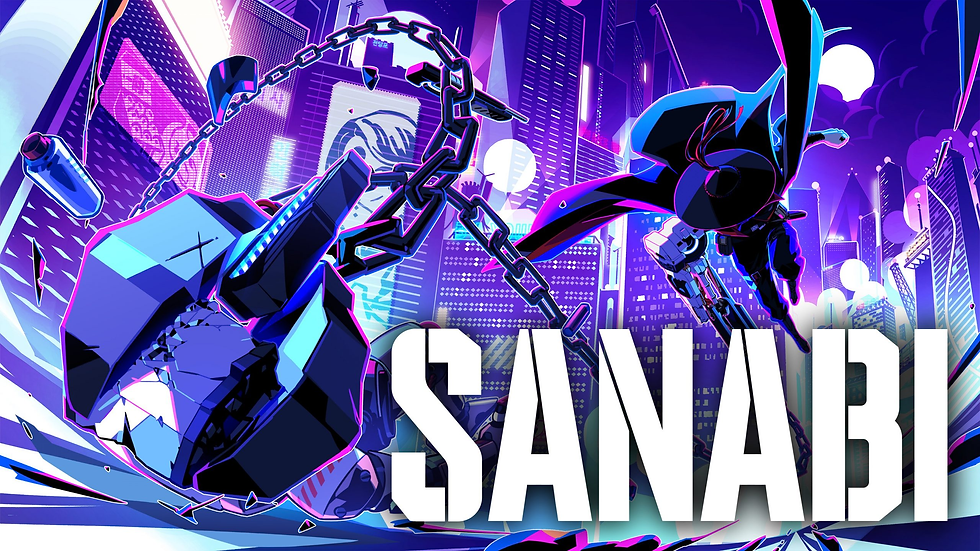
I think Soma is gonna be the greatest example of games exploring cloning for most people. It is exactly what I described earlier. A work of art that explores the multiple questions and conflicts to be found with cloning human individuals. Fantastic game, and even though my review back in 2022 was critical I’ve since warmed up to it. This review is not about Soma, because we already did that 4 years ago. Today's topic is Sanabi, a 2D action platformer developed by South Korean indie studio Wonder Potion. It’s also published by NEOWIZ who helped put out such titles like Lies of P. Just goes to show how far South Korea has gotten in the video game market, and they are slowly rising in becoming one of the greats. Sanabi was Wonder Potion’s debut title back in 2023, and for their first game they knocked it out of the park. It’s become well beloved since its release, and I’ve recommended the game a lot over the years. Mainly because of one phrase that drags my attention, “It’s kinda like Katana Zero.” That is an indie game I have the utmost respect for. An all time masterpiece held back by a cliffhanger ending. Askiisoft did say they were going to finish the story with free DLC, but it is taking too long and I honestly lost interest. I have not encountered a game like Katana Zero since then, but seeing screenshots of Sanabi did remind me of it. Colorful art, stoic protagonist in a robe, and from what I was told a mindbending story.
It’s very clear that Sanabi drew a ton of inspiration from Katana Zero. At one point in the game they reference it, and I think that’s pretty neat. The difference is that it’s a 2D platformer focused on precision and momentum. I love platformers, and grappling hooks are awesome. Sanabi has been on my wishlist for quite awhile, and I thought it was high time I finally checked this game out. Bought a physical copy during the holidays, binged it over the last three days, and I almost cried. I’m not joking when I say I actually did almost cry at the ending scene. Sanabi is so much better than I was expecting it to be. It’s not like Katana Zero. If you go in expecting a game that is exactly like Katana Zero then you’re gonna be disappointed. I went in with an open mindset, and what I got in return was an experience I would argue is better than Katana Zero. I don’t why it took me so long to finally play Sanabi, but I’m grateful I did. So today we’ll be talking about Sanabi, and why it deserves your attention. A title surely worth swinging into.
Story

Our story follows who I’ll refer to as the General, former soldier now veteran of the Royal Court. He was one of many soldiers to be augmented by the government, and given an enhancement to make hunting and cutting down targets more easy. Trading his right arm for a giant mechanized grapple arm that allows him to swing across a large chasm and close the distance within seconds. He was a lethal killer garnishing fear and respect during his service. One day he decided to retire and live out in the countryside with his daughter. Hoping this new life would bring her no harm, and together they could live in peace. He played with her, cooked every meal for her, and did all he could to protect her from the dangers of the outside world. He was a killer, but he was a good man at heart and his daughter was always happy to be by his side. One day the General was busy playing a game with his daughter. Doing what he usually does, his daughter decides to bring out some of his old military equipment for play. The General says why not, and the daughter rushes back into their house to grab a second walkie-talkie she forgot. The General holds onto the one she brought outside, but then gets a call from the daughter. She says there’s a strange device in the house, there’s a ticking timer going down, and it’s labeled with the word “Sanabi”. He then realizes a bomb has been planted inside his home by someone from his past. An individual of some sort who wishes to claim bloody revenge.
He rushes in attempting to save his daughter, but is too late. Gazing into the fiery debris which is now his daughter’s grave. The General, filled with rage, decides to go on a one man hunt to track down Sanabi. Breaking into a criminal organization who sold Sanabi the bomb, killing everyone he sees, and walking out only to be greeted by his former comrade Colonel Baek. He too knows Sanabi is back and wishes to help the General claim his revenge. They’ve noticed Sanabi fled to Mago City, home of the mega corporation Mago Group. Within a few days millions of citizens have vanished out of thin air. No trace of where they went or if they were killed. They believe Sanabi has something to deal with this along with Mago Group, and want to send the General on one final job. The General agrees, but on one term. The army initiates Operation Zero, the signal that marks not only the General’s final mission but also death. Baek agrees, and the next day the General is flown out. Shot down mid flight, the General navigates the streets of Mago City. Dead as a ghost town, but before venturing in he was told to find the client who reported the strange disappearances. Mari, a young girl trapped in the city and the General does manage to find her. She wants to help the General get to the top of the city where she believes the true culprits lie, and the General has no other choice. Venturing alongside a girl he sees as a hold back.
Gameplay

It's a 2D action platformer with a heavy emphasis on precision and momentum. Our protagonist is outfitted with a grappling hook arm, and it can be shot onto any surface that allows the hook to be attached. Your momentum is determined by how you launch yourself out of a swing, and the swinging has a high skill ceiling. Knowing how to move yourself and when to let go. You even have a boost ability while swinging to quickly launch yourself or swing in the other direction, so there’s no need in having to build momentum in awkward moments. It’s also because there are a lot of moments where a quick reaction is needed. Whether it be with platforming, or avoiding the obstacles in your way. Whether it be surfaces you can’t touch because it’ll burn you, or the shots of enemies. Over time you will unlock new abilities that expand how you traverse levels, and the way enemies are handled. A zipline to quickly pull yourself towards where the arm is attached. A homing attack to bash into movable objects and or break down heavily armored enemies. There is one level later on where you control factory robots, and you use them to solve puzzles and to get to where you need to be. Levels containing varied mechanics which are stacked to create all these fun set pieces you zoom through. That factory level for instance has bombs you use to blow up metal barriers, and platforms being moved about that switch between being usable and then flipping out. It’s a fun way to stack mechanics and keep it fresh.
Combat is quite simple. Point your grapple arm towards an enemy, and if they’re highlighted in red you can zip towards them. A majority of foes die in one hit, but some need to be dealt with in different ways. Shielded enemies need to be attacked from behind. Some have a glowing barrier that needs to be disabled or knocked into fire. Specific enemies later on need the homing attack, so just bash ‘em. Unlike Katana Zero where the gimmick is that everything including you die in one hit in Sanabi you don’t. The General has a health bar replenished when reaching checkpoints or avoiding getting hit for a small period of time. It’s a nice way of keeping the action going and giving the player a fair shot in a game where a ton is happening at once and quickly. At the end of each chapter there is a boss, and the boss is a test of not just skill but also all you have learned during a level. With multiple phases and attacks you need to move away from before zooming in for lethal strikes. They are what block you from reaching the end, but remember that you are a lethal killer. You’re more than just a one man army, and slowly you’ll realize your full potential. Discover the truth lying atop the world, and realize that reality is not what it seems to be.
Thoughts

You can already tell that I’m going to recommend Sanabi. It’s a very fun game with well thought out design, and while there are a few flaws in the gameplay aspect it’s nothing that really detracts from my appreciation of the game. If not the gameplay then it’s the story, and how it’s one of few times a game almost made me cry while playing. The gameplay loop of Sanabi is a fast-paced joy ride. With five total chapters to play taking across locations with their own unique mechanics and enemies to face. A good platformer is one that slowly introduces ideas, gets you used to them, and stacks them together to test you on everything you learned. Shovel Knight has always been my go to example as its tutorial level is one of the best. Teaching you how the game works and the rules of the world without having to constantly explain. Sanabi does it’s tutorials well as it’s intro level while not clogged full of hazards does have you get used to the physics. That not all surfaces can be attached to, and at times you need to learn how to create momentum while under a time limit and stress. Learning how to swing yourself up from the bottom of a corner, or launch yourself at awkward angles. I personally found the game to be kinda easy especially early on, but for most people I expect Sanabi to be a decently challenging time. That latter half of the game though has a difficulty spike, but it is a well paced one. One I knew what to expect from seeing my prior experience with Katana Zero prepared me for spikes.
The level mechanics make sense for each environment, and just when you think a level begins to lag on too long it throws you at the boss and gets ready to move on. Combat is really forgiving seeing how Sanabi has a health system compared to Katana Zero. It’s why I said if you expect a game exactly like Katana Zero you’re gonna be slightly disappointed. I understand why the devs went with this system though. It’s due to how open ended the player space is, and how players need said open space to swing around easily. You’re constantly moving quickly, and it’s hard to quickly move out of attacks or incoming fire in a few seconds. They went with a health bar, and it’s balanced out really well. Four hits is enough to keep the pressure going, but not too much so you can tank every blow. The game does have difficulty settings if you find Sanabi too hard or too easy, and I went with normal mode which is pretty balanced for the most part. Core design is great. Not too overly complex or simple with stacking mechanics and the player unlocking new powers over time which expand how platforming challenges can build up. What main criticisms come down to is what the game throws at the player, and most of it is good. Some of it’s trial and error, especially the later parts of the game. That boss fight in chapter four was the hardest thing I've dealt with in a platformer. I mean it was a fun epic fight with good design and mechanics, but I died more times than the rest of Sanabi. I know some people will not like trial and error as it leads to a fun challenge becoming frustrating.
The factory section has you navigate rooms without a giant robot staring at you for too long, and later in the exact same level you have to quickly move between cover and cover as it shoots an instant death laser at you. It’s really stressful, and it doesn’t help that when it’s firing the laser the screen starts to blur out. Making it hard to tell whether or not you got into cover or not. The bash homing attack takes time to get used to, because launching an object in one direction sends you moving the other. Sometimes an object is positioned right above a bottomless pit, and you need to move it up. So you better bash and hope you react quick enough to swing onto the moving box you crashed into.I mentioned there’s a difficult spike midway through the game where the real sh*t really gets going. That’s around the end of chapter three, but honestly I welcome it. Sanabi may get really difficult at times, but it is a fair game. I understand what killed me. Most of the time there’s one specific way to do a platforming section rather than it being random. Platformers where you learn on death are always frustrating, but when you do learn and know how to keep on going it’s satisfying. Combine this with some nice art direction and a synthwave soundtrack that eggs you on. To keep on kicking ass! Using a grappling hook has never been more fun.
As much as I drone about the gameplay being extremely fun it’s not the main focus of the game. There’s been a ton of effort put towards the story and writing of Sanabi, and at times there are more cutscenes than actual gameplay in Sanabi. A selling point that may drive people away. I’d argue Katana Zero is the better video game between these two titles, and at times Sanabi has pacing issues. With dialogue sections that drone on, and needing to go explain everything. Some people don't like not, but I don't mind. Mainly because I am one who favors writing in games and enjoys seeing what a game attempts to explore. Sanabi is a more satisfying experience in my opinion than Katana Zero. Unlike Katana Zero, which was mystical but didn’t really answer every question leading to a cliffhanger ending that for some reason hasn't been answered for almost six years, the story of Sanabi has a message and conclusion. At least Katana Zero didn't take the Stranger Things route. Am I right lads!?
The developers and writers of Sanabi had something to say, and they nailed it wonderfully. A while back Yathzee Croshaw made an argument about people who say stories in games don’t matter if the gameplay is good and mindlessly fun. What he said in response was, “People don’t say that if the story is actually good.” With titles like Spec Ops: The Line and Wolfenstein: The New Order being examples of games with alright gameplay made up with great storytelling. Examples of how games can be art rather than be fun all the time. There is an argument to be made of whether games should be art, or if games should always be deeply written. I argue both, and the story of Sanabi is good. It is what kept me playing until the end. Some parts do feel dragged out at times. Such as the plot twist being hinted in chapter three, and you have to play two more hours to learn more. There are so many plot twists and turns in Sanabi, but it all culminates in what I believe is a narrative about love and grief. Okay, so while writing this review I realized trying to talk about Sanabi without spoiling it is really hard. Sanabi works when you know the full context, and I don’t want people to skip this game just because they already know what happens. The next paragraph is full of spoilers, so if you don’t want it then skip. The game is only fifteen USD, and took me around ten or so hours to beat. Please go play if you haven't yet.
Spoiler alert. Spoiler alert. Stop reading if you don’t want a spoiler alert.
The entire story builds itself up as a revenge story. A father unable to mentally process the death of his child and thinks revenge is the next best step. Denying comfort from a young girl who wishes to help him. Believing he failed to do the one thing he promised, and that he doesn’t deserve a second chance. Slowly opening up to this girl, learning why she’s here, and protecting her despite all the constant arguments they have. That is what Sanabi is about and for near the end it still is. Time passes on and we begin to notice some strange signals. The General’s memories start to pop up randomly and become distorted. His past glitching almost as if something is wrong. In chapter 3 a big plot twist is dropped as a robot identifies the General as a worker droid. Signaling that we are not who we think we are. Mari seemed innocent at first, but begins telling the General she knows about us. The question of where the populace of Mago City went is mysterious right until the final plot twist. We are NOT the General. We are a robot containing altered memories of the General who died ten years ago. What really happened was that the General’s wife died in a big explosion, and the real General was unable to grieve. He became a broken man, while his child watched him cry alone. That daughter was named Mari, and she didn’t want to see her father like this. She created a digital replica of his personality and memories, but this was illegal. Soon their house was broken into and the General died defending his daughter. The copy of his memories and mind were stolen, altered, and installed into an android. Mago Group hoped to create an army, but then the army came and so you awoke. You, a reborn man who discovers the truth. Of a man unable to move on. Of a girl who blames herself for why everything fell apart, and is unable to move on alone without her father. Of you coming to comfort her, and say everything is going to be alright. Making one last sacrifice to save her.
Sanabi is a game made of love. The folks who told me it was like Katana Zero are wrong. What I got instead was a beautiful narrative that used the idea of cloning to explore grief, regret, love, family, and what one is willing to do. The importance of cherishing others and the time you have spent with them even when it’s long past their death. Remembering them in good faith instead of the pain came before and afterwards. Sanabi is a masterpiece in my books. It is not going to be for everyone, but what this little indie game manages to do is monumental. I strongly recommend Sanabi. Please play this if you have not. It is well worth your time. In the end I give Sanabi a 10/10 for being incredible.


Comments